The Great Infrastructure Rebuild
Six Surprising Realities of the 2026 Data Center Supercycle
Test the strategic choices, STEEP drivers, and regional contagion paths from this brief inside the Scenario Decision Emulator or the 3D Global Signal Map.
The Great Infrastructure Rebuild: 6 Surprising Realities of the 2026 Data Center Supercycle
The data center has undergone a fundamental transformation from a passive IT repository to a high-stakes industrial power plant. This shift is driven by the dual pressures of AI acceleration and persistent supply chain disruptions, which have created a structural market, price, and procurement strain that demands immediate, aggressive modernization.
The Six Surprising Realities
To navigate this new reality, leaders must move beyond the legacy requirements of 2024. The following six surprising realities of the 2026 Data Center Supercycle highlight the need for a new approach:
The End of the Server Room, The Rise of the Compute Factory
Modern facilities are reaching a scale that collapses the distinction between data centers and heavy industrial complexes. Examples include Meta's Hyperion initiative and xAI's Colossus 2, which resemble energy-intensive manufacturing sites rather than cloud regions.
Procurement as a Competitive Weapon (or a Liability)
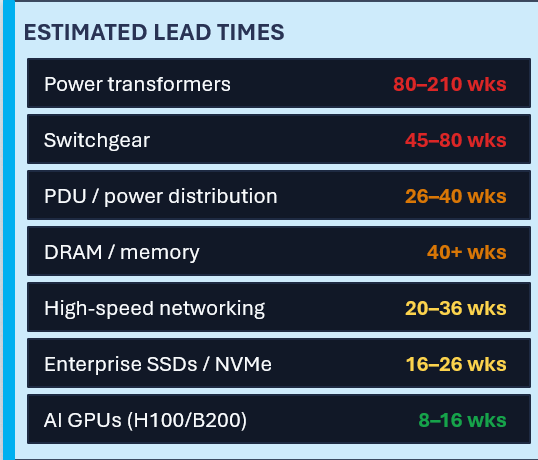
The "Pricing Supercycle" is characterized by cumulative quarterly compounding, driven by a permanent strategic capacity reallocation. The "Big Four" (Google, Amazon, Microsoft, and Meta) have placed open-ended orders, creating a desperate environment for the rest of the market.
Energy Beamed from the Heavens: Space-Based Solar
The physical grid is now the primary bottleneck for data center operationalization. Hyperscalers are turning to Space-Based Data Centers (SBDC) and solar energy to de-risk their roadmap. Meta's 1 GW reservation agreement with Overview Energy marks a shift away from grid-dependent PPA models toward purpose-built generation architectures.
Architecture is No Longer Optional: The AI-First Rack
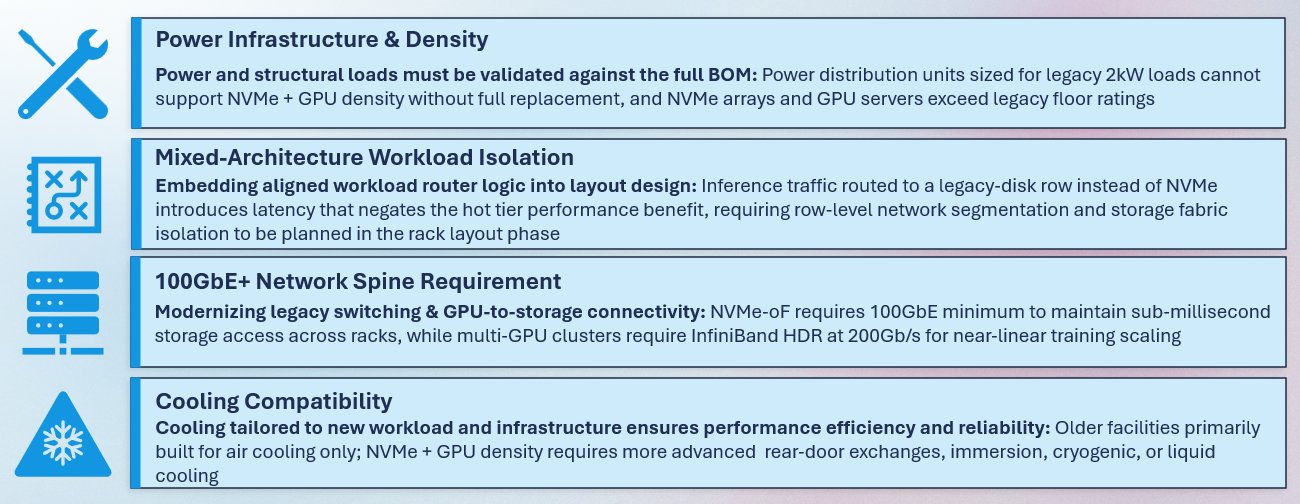
Traditional data center designs are physically incapable of supporting modern AI requirements. The "AI-First" rack requires specialized cooling, networking, and technical reconfiguration to maintain performance.
The Hyperscaler Identity Crisis: Specialized Performance Layers
Hyperscalers have moved past general-purpose cloud services to become specialized performance layers. Understanding the "DNA" of each provider is now a prerequisite for architectural alignment, with each provider optimized for specific use cases.
- GCP: GCP’s infrastructure is purpose-built for cloud-native operations, data-intensive workloads, and AI-driven development, with a globally unified private backbone and seamless analytics-to-AI integration that simplifies modern application delivery and large-scale data pipelines
- AWS: AWS centers its infrastructure strategy on breadth, scale, and reliability, with unmatched optionality and regional presence giving enterprises the ability to fine-tune performance and cost across virtually any architectural pattern or operational requirement
- Azure: Azure’s infrastructure is optimized for enterprise-native and hybrid cloud continuity, deeply aligned with Windows and the broader Microsoft productivity and security ecosystem as a natural extension of existing enterprise environments and on-prem investments
- Oracle: OCI exhibits a relatively differentiated and specialized position as the performance-first and database-centric alternative, emphasizing cloud and bare-metal performance, low-latency networking, and a highly optimized, automated and intelligent data fabric.
Autonomous Efficiency & Emerging Innovations
To maximize throughput without waiting years for hardware or grid upgrades, operators are turning to innovative new solutions to mitigate bottlenecks, supply chain risks, and infrastructure challenges .
-Orchestrated RL Control Agents (ORCA): Innovators like Hammerhead AI and Phaidra use Reinforcement Learning to dynamically assign compute workloads and optimize cooling systems.
-Behind-the-Meter Strategies: Co-locating data centers directly with large-scale generation assets, such as power plants, to bypass the transmission grid entirely
-AI-driven Grid Enhancing Technologies (GETs): Employed as an embedded component to mitigate physical infrastructure constraints and improve the capacity efficiency of existing substations and transmission lines
-Dynamic Line Rating (DLR): Can safely increase transmission capacity by 10-30% during favorable weather conditions, effectively unlocking hidden capacity for renewable integration without laying new copper
The Future of Data Centers
The velocity of this rebuild is staggering, with global data center capacity projected to reach 156 gigawatts by 2030, a 3.5x increase in just five years. AI will account for 70% of total demand, and organizations must recognize that total infrastructure costs now run 2–3× the cost of the GPU hardware itself. This is not a cyclical trend that will revert to a 2024 baseline; it is a permanent, structural shift. As an infrastructure leader, it is essential to ask: Is your current strategy built for a legacy world, or is it ready for the 156-gigawatt reality? In this supercycle, the gap between the modernized and the stagnant will define the next decade of competitive survival.
Share or simulate this intelligence brief
← Back to Thought Leadership