Google I/O 2026 - Takeaways
The Platform Play Behind the Product Announcements
Test the strategic choices, STEEP drivers, and regional contagion paths from this brief inside the Scenario Decision Emulator or the 3D Global Signal Map.
Google I/O 2026: The Platform Play Behind the Product Announcements
AI Infrastructure & Competitive Dynamics Analysis
Executive Summary
Google I/O 2026 was less a product showcase and more a platform declaration. Across nearly every announcement, from Gemini 2.5 Pro to the expanded AI Overviews footprint to Jules, Google's autonomous coding agent, the underlying message was consistent: Google is not competing on features. It is competing on infrastructure depth, model accessibility, and ecosystem lock-in.
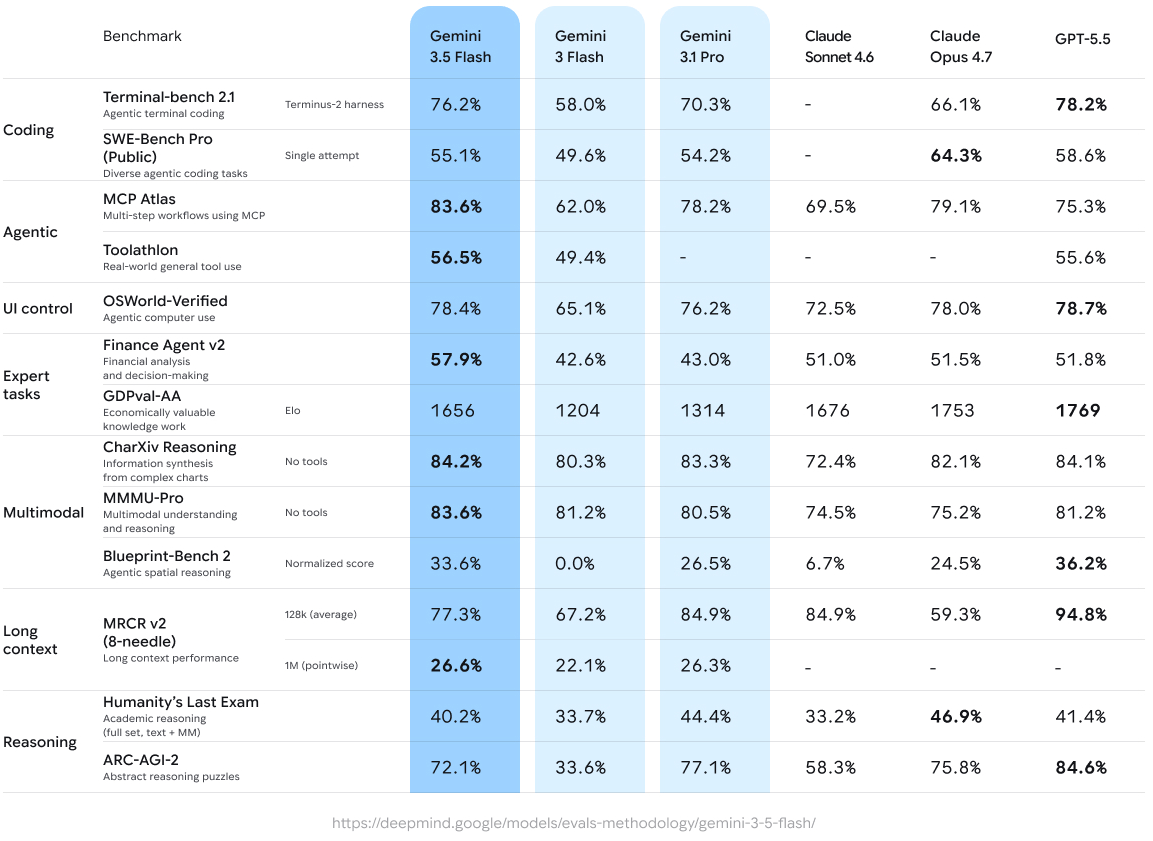
The company unveiled a substantially evolved Gemini platform architecture, pushed its developer tools into direct competition with OpenAI and Anthropic's API offerings, and made a clear case that its multimodal and long-context capabilities now represent the most technically competitive frontier model stack available at scale. Taken together, the announcements at I/O 2026 reflect a company that has resolved its identity crisis from the past two years and is now executing with notable strategic coherence.
For enterprises and technology leaders, the implications extend well beyond any single product. Google is assembling the infrastructure layer for the next phase of AI deployment, and the decisions made now about platform allegiance, developer tooling, and model strategy will carry compounding consequences.
Key Announcement Summary
- Gemini 2.5 Pro & Flash: Frontier reasoning model with 1M token context; Flash delivers sub-second inference at scale
- Gemini Omni: Unified multimodal architecture processing text, image, audio, and video in a single model pass
- Jules (Coding Agent): Autonomous GitHub-integrated coding agent capable of multi-step task execution across repos
- AI Overviews Expansion: AI-generated synthesis now covers 40+ countries and is integrated into Search, Lens, and Maps
- Google AI Studio Updates: Expanded rate limits, grounding tools, multimodal file API, and fine-tuning pipelines
- NotebookLM Enterprise: Enterprise-ready knowledge synthesis tool with organizational memory and audio overview features
The Gemini Architecture: From Model to Platform
The most strategically consequential announcement at I/O 2026 was not a headline product. It was the architectural maturation of Gemini itself.
Gemini 2.5 Pro and Gemini 2.5 Flash represent a bifurcation in the Gemini platform architecture, with a high-reasoning, high-cost flagship for complex inference workloads and a cost-optimized, low-latency variant purpose-built for production deployments at scale. Gemini Omni processes text, image, audio, and video within a unified model pass, eliminating the latency, error propagation, and context loss inherent in multi-model pipelines.
The 1M token context window in Gemini 2.5 Pro is a significant advantage, enabling complex reasoning tasks such as legal document review, multi-document synthesis, and full codebase analysis. Google's scale advantage in serving that context window economically is non-trivial and reflects years of TPU infrastructure investment.
The Developer Stack: AI Studio and the API Wars
Google's developer announcements at I/O 2026 reflect a clear competitive posture: AI Studio is no longer a developer preview sandbox. It is a production API platform, and Google intends to take market share from OpenAI and Anthropic at the developer and enterprise layer.
The updates are substantive, with expanded rate limits, grounding tools, multimodal file API, and fine-tuning pipelines. Jules, the autonomous coding agent, is the most direct competitive signal in the developer stack, operating in the same conceptual space as GitHub Copilot Workspace and Anthropic's Claude-powered coding environments.
Search, AI Overviews, and the Distribution Moat
The expansion of AI Overviews may ultimately carry the largest long-term competitive weight. AI Overviews is now available in more than 40 countries and integrated across Search, Google Lens, and Maps. The scale is difficult to overstate, with Google processing approximately 8.5 billion searches per day.
This is strategically different from anything OpenAI, Anthropic, or Microsoft can replicate in the near term. AI Overviews operates as an invisible infrastructure layer within a search behavior that 2 billion people already perform habitually. The network effect compounds in both directions: more search usage trains better models, and better models drive more search engagement.
Infrastructure Depth: The TPU Advantage and What It Means
Behind every I/O announcement is a hardware and infrastructure reality that rarely receives adequate attention in product coverage: Google's training and serving infrastructure is purpose-built in ways that no cloud competitor yet fully matches.
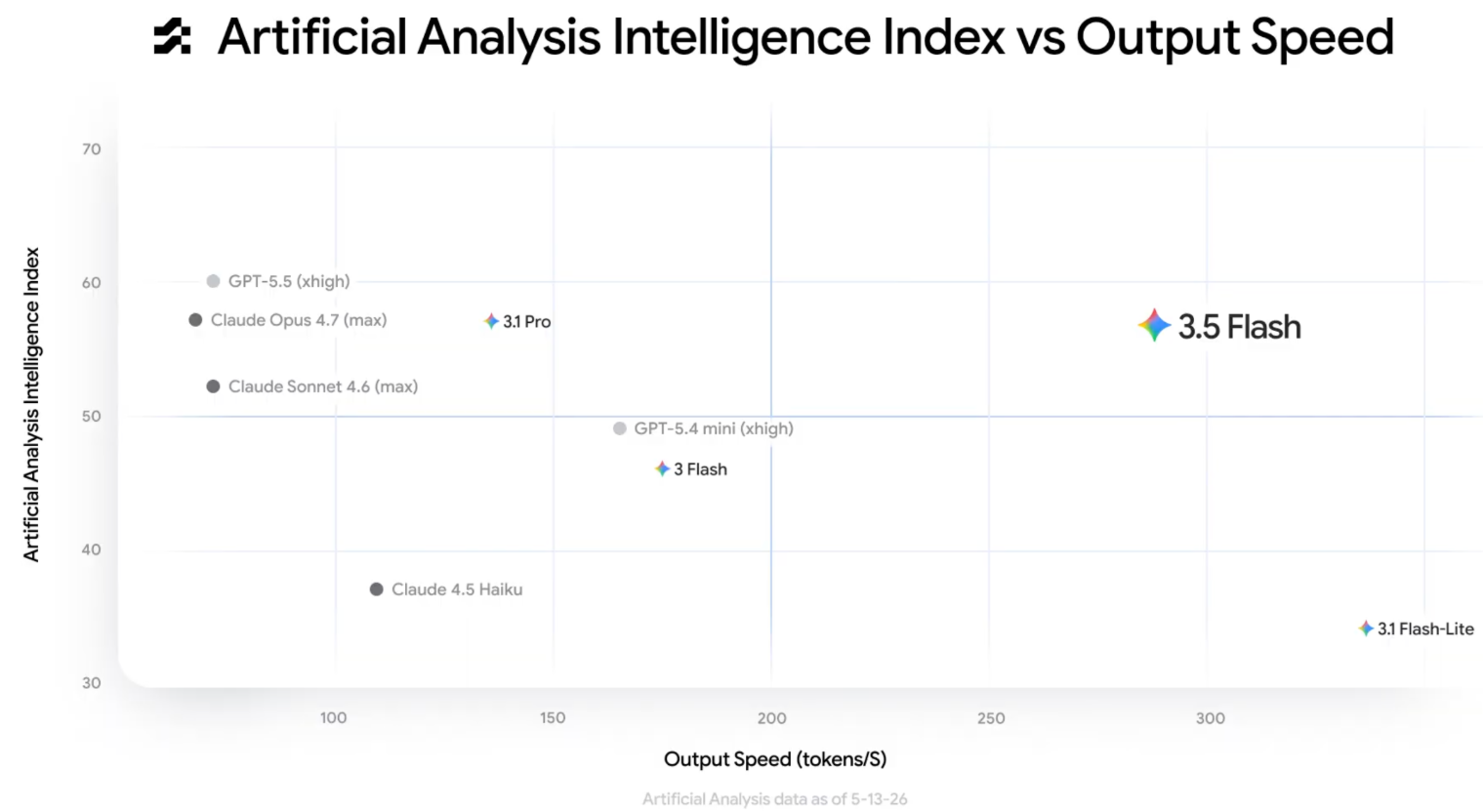
Google's Tensor Processing Units (TPUs), now in their seventh generation, are designed from the chip level up to run Gemini workloads efficiently. The cost per token at scale on TPU infrastructure is materially lower than equivalent workloads on NVIDIA GPU clusters, a structural cost advantage that enables Google to offer Gemini Flash at price points that would be economically untenable for a company serving inference on third-party silicon.
Competitive Landscape: Where Google Leads, Lags, and Faces Structural Risk
Where Google Leads
- Multimodal architecture depth
- Inference economics at scale
- Search distribution
- Long-context performance
Where Google Lags
- Enterprise trust and adoption velocity
- Regulated-industry positioning
The Structural Risk to Watch
- Regulatory exposure is Google's most underappreciated competitive variable heading into the second half of the decade.
Strategic Implications for Enterprise Technology Leaders
Google I/O 2026 reinforces several dynamics that should inform enterprise AI platform strategy in the near term.
- Model performance benchmarks are necessary but insufficient for platform selection.
- Inference economics, ecosystem integration depth, governance and compliance posture, and long-term vendor stability should prioritize platform selection.
- Developer tooling wars are an enterprise risk surface.
- AI Overviews represent a forcing function for enterprise content strategy.
- Agentic AI readiness is the next infrastructure audit.
Conclusion
Google I/O 2026 delivered what the company needed: a coherent, technically substantive, and strategically legible platform narrative. The announcements are not revolutionary in isolation, but they are collectively significant because they demonstrate execution across every layer of the AI stack simultaneously: models, infrastructure, developer tools, consumer distribution, and enterprise products.
The organizations best positioned heading into the second half of the decade will be those that treat platform selection less as a procurement decision and more as a strategic architecture choice with compounding implications. The window for that assessment is now.
Share or simulate this intelligence brief
← Back to Thought Leadership