A Tale of Two AI Architectures
The Unit Economics of Consumer Scale vs. Enterprise Margin
Test the strategic choices, STEEP drivers, and regional contagion paths from this brief inside the Scenario Decision Emulator or the 3D Global Signal Map.
The Unit Economics of Consumer-Scale AI Are a Structural Liability
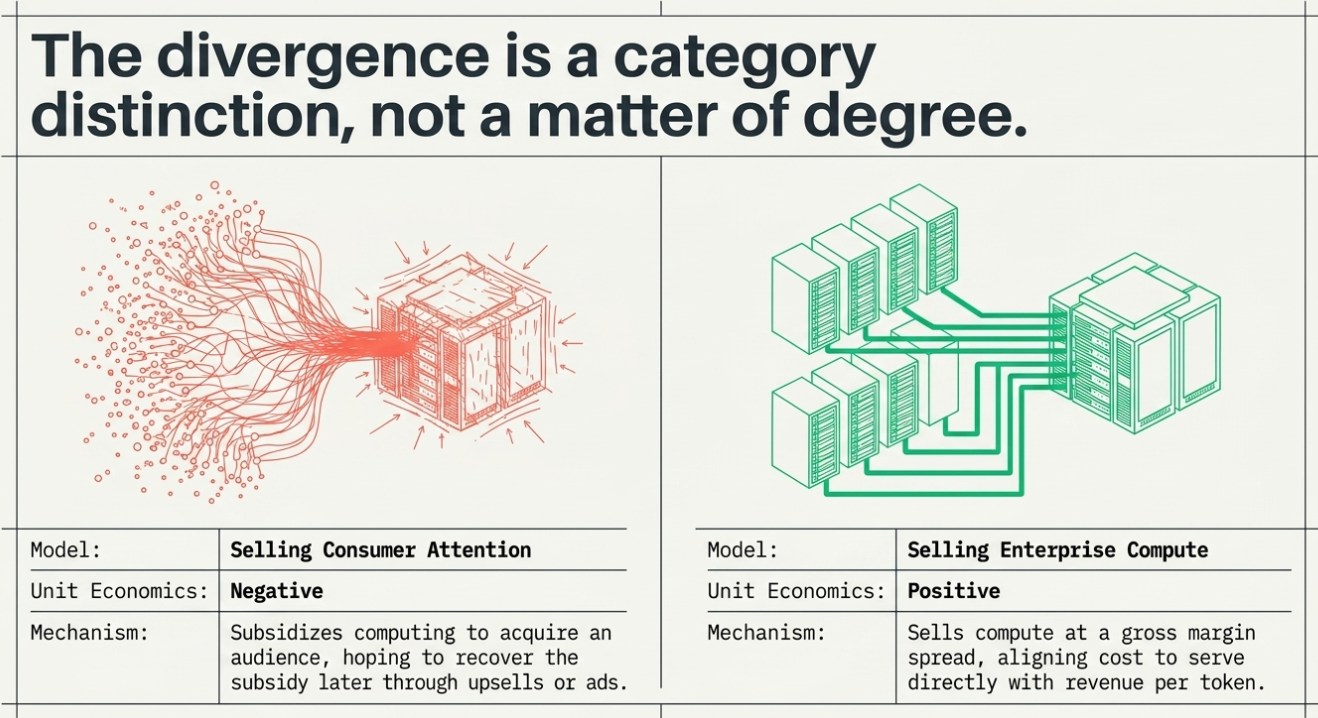
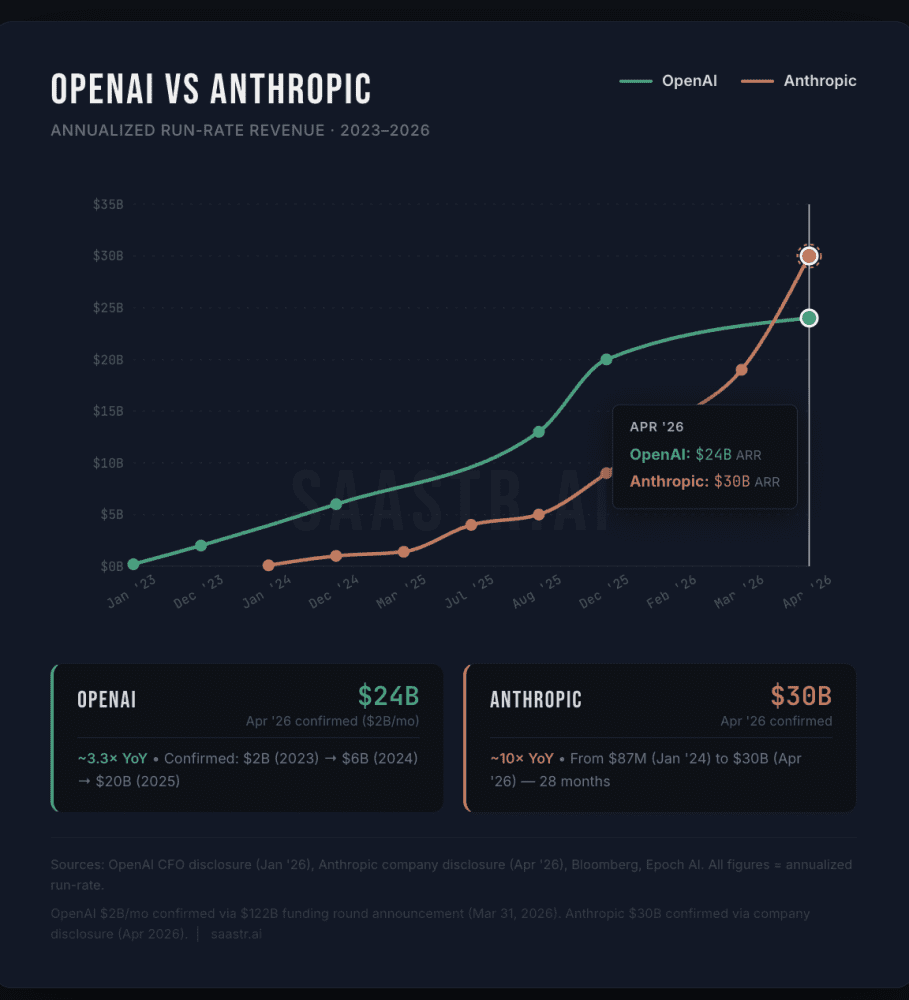
The recent news that Anthropic's annualized revenue run-rate has surpassed OpenAI's has led to a misconception that the two companies are competing in the same category. However, a closer look reveals that they operate entirely different businesses. OpenAI sells consumer attention at negative unit economics, while Anthropic sells enterprise compute at positive unit economics.
Business Model Divergence
The divergence between the two companies' business models is evident in their costs, not their revenues. OpenAI's non-GAAP operating margin is -122%, meaning the company loses $1.22 for every dollar of revenue. In contrast, Anthropic reported its first profitable quarter, generating $559 million in operating profit. This difference in margin is not a reflection of execution quality but rather a result of their business model architecture.
The Free User Is a Cost Center, Not a Funnel
OpenAI's consumer strategy is often narrated as a conversion funnel, where free users are acquired and then upsold to paid tiers. However, the data contradicts this narrative. ChatGPT's user growth has stalled, and internal projections show a significant drop in Plus subscribers. The free tier has become a structural cost center, with every query from a non-paying user incurring inference compute costs that OpenAI must pay.
Anthropic's Advantage
Anthropic's business architecture is the inverse of OpenAI's. Anthropic serves 500 enterprises spending over $1 million annually on Claude API contracts, with a revenue base concentrated in enterprise API calls and cloud provider deals, resulting in a positive margin. Anthropic's growth rate is a signal of its business model's success, with the company reaching $30 billion in annualized revenue in under three years without giving away a single free query.
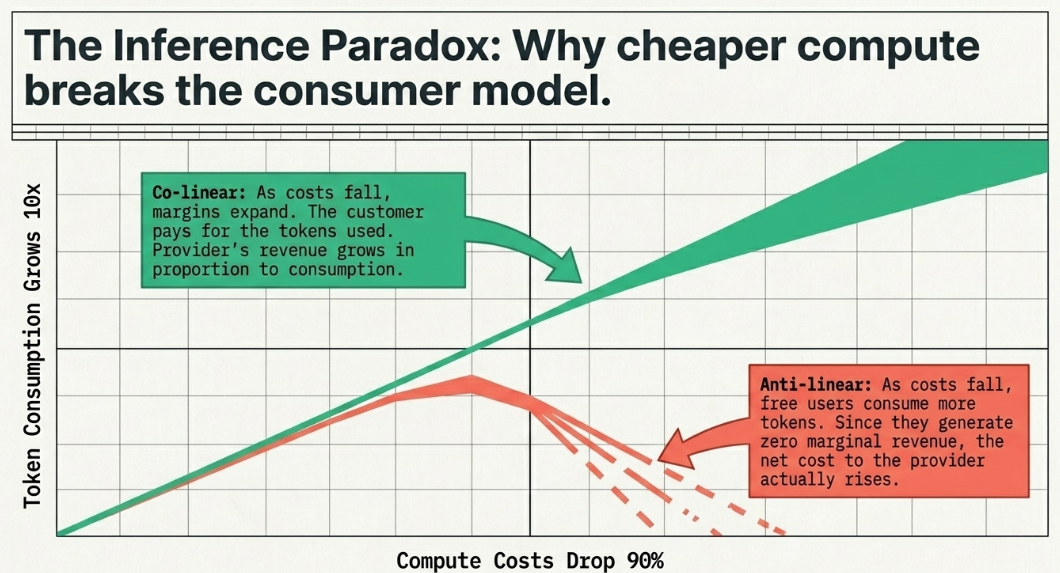
Enterprise API revenue is co-linear with inference costs: customers pay for what they consume, and the vendor's gross margin is the spread between the price per token and the cost per token. If that spread is positive at the contract level, the business can scale revenue and gross profit together. OpenAI's consumer revenue is anti-linear with inference costs: free users consume tokens without generating revenue, and even paying consumer subscribers at $20 per month consume far more tokens than their subscription fee covers if they are using frontier models. The difference between these two architectures is not a matter of degree. It is a category distinction. One business sells computers at a margin. The other subsidizes computing to acquire an audience and hopes to recover the subsidy later through upsells, ads, or some combination of both.
Training Cost Gap
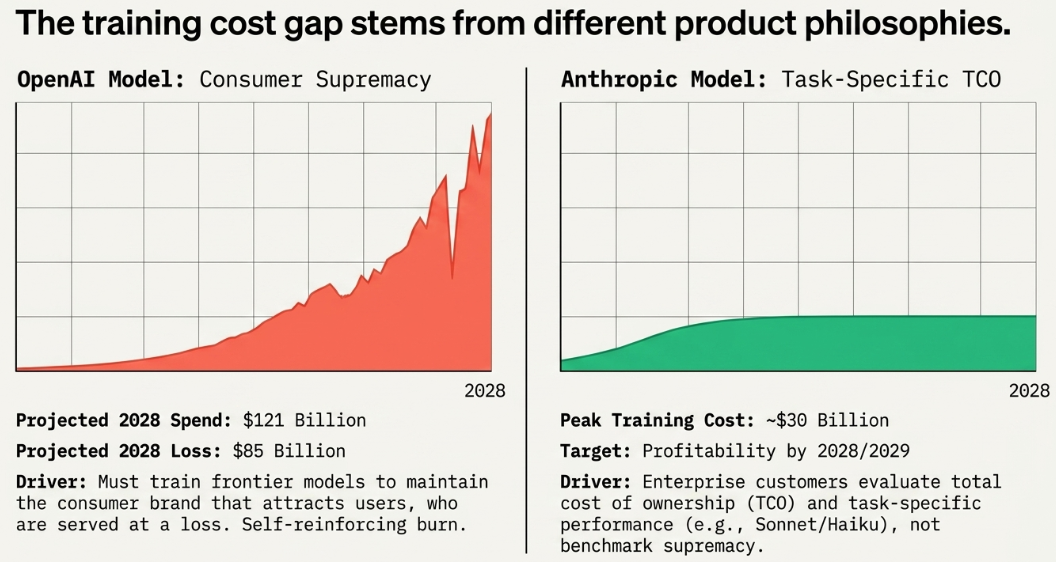
The training cost gap between the two companies is significant. OpenAI projects spending $121 billion on compute in 2028, while Anthropic's training costs peak at roughly $30 billion. This gap is not a result of Anthropic being more capital-efficient but rather a function of Anthropic needing less to achieve competitive model performance within an enterprise revenue architecture.
Compute Commitments
The forward compute obligation stack is a significant constraint for both companies. OpenAI is committed to roughly $600 billion in compute contracts over the next five years, while Anthropic pays xAI $1.25 billion per month for compute capacity. The capital intensity of building versus buying compute infrastructure is orders of magnitude apart.
Public Markets Will Force Transparency
The S-1 filings will force both companies to disclose their financials, including unit economics, compute commitment stacks, and cash-flow breakeven timelines. This transparency will allow investors to compare the two companies' business models directly and make a judgment on whose unit economics survive public scrutiny.
The Enterprise Revenue Engine
The enterprise revenue engine is driving growth in the AI industry, with Anthropic overtaking OpenAI in US business adoption. The coding-agent category is expanding rapidly, with Claude Code generating $2.5 billion in annualized revenue within 11 months of launch. OpenAI's Codex is growing 70% month over month, but the revenue density per customer is dramatically higher in the enterprise segment.
What the S-1 Filings Will Reveal
The S-1 filings will reveal segment-level gross margins, which will reframes the competitive narrative from "who has the better model" to "who has the sustainable business." Investors will not abandon OpenAI but will reprice it based on the true cost of serving its consumer segment.
The Advertising Pivot
OpenAI's advertising pilot is an admission of the consumer cost problem and the revenue gap. However, advertising in a chat interface is a product risk that complicates the enterprise sales narrative. The harder OpenAI pushes into advertising, the more it complicates its enterprise sales narrative.
The 2030 Endgame
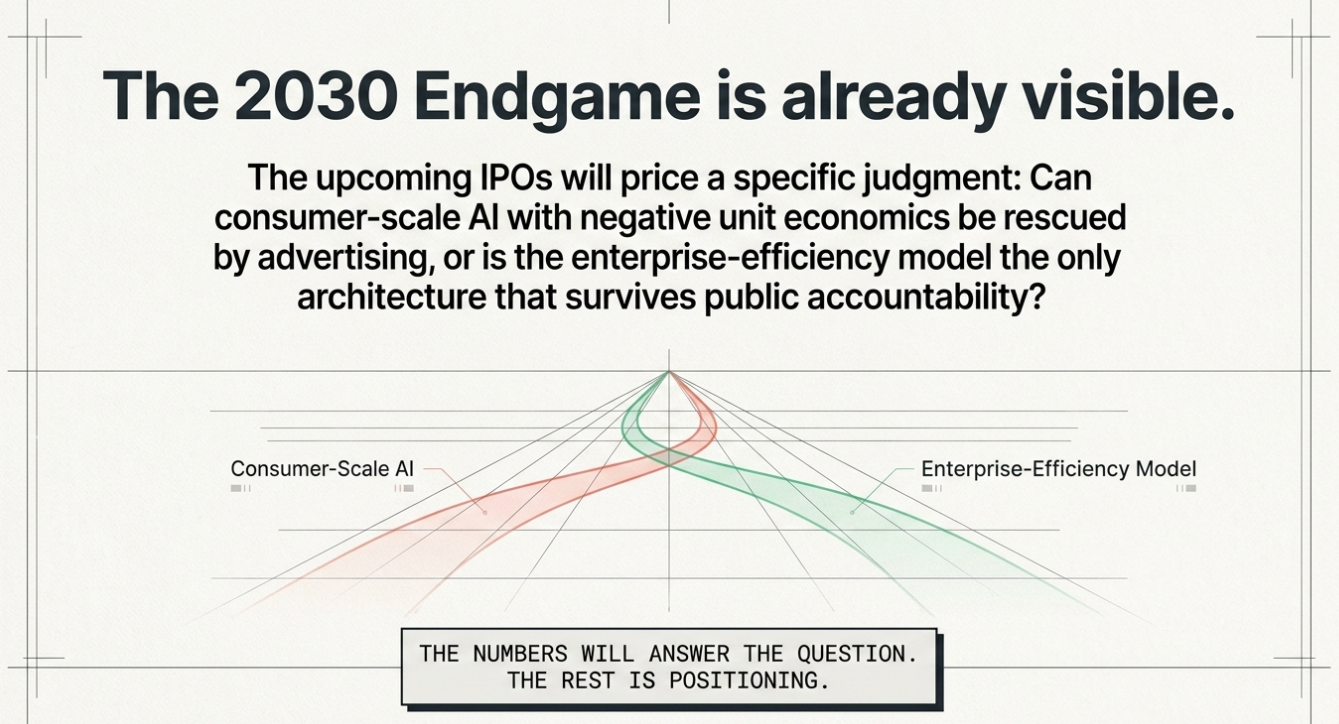
The financial trajectories of both companies converge on a single question: whether inference costs decline faster than consumption grows. If the cost per million tokens for frontier-model inference falls by 90% annually but total token consumption grows by 10x annually, the net cost to the model provider still rises. Anthropic's enterprise consumption-based pricing is structurally safer, as the customer pays for the tokens they use, and the provider's revenue grows in proportion to consumption.
Share or simulate this intelligence brief
← Back to Thought Leadership