Biomemory
Biomemory’s interoperable, modular architecture combines biosecure DNA media and industrialized end-to-end write/store/read processes to create a new AI storage tier
DNA as Infrastructure: Why Biomemory's Acquisition of Catalog Technologies Signals a Storage Paradigm Shift
The data storage industry has long relied on a simple premise: increasing storage capacity through silicon, magnetic media, and rack density. However, as the volume of cold data grows and the energy cost of traditional storage rises, this approach is becoming unsustainable.
Rewriting Storage at the Molecular Level
Biomemory is pioneering a new approach, using biotechnology and information technology to develop DNA-based data storage solutions for enterprise and data center environments. Founded in 2021, the company has developed a core innovation: encoding digital data into synthetic DNA molecules and storing it in a stable, readable format for decades.
- Faster reading: Biomemory's approach enables faster reading and lower error rates.
- Biosecurity by design: The company's architecture is centered on biosecurity by design, making storage media inherently resistant to conventional cyber attack vectors.
- Flagship product: The Biomemory DNA Card offers verified data retention of 50, 100, or 150 years with IT-compatible Uncorrectable Error Rate (UBER) metrics.
What the Acquisition of Catalog Technologies Actually Does
In March 2025, Biomemory acquired assets from Catalog Technologies, a pioneer in high-throughput DNA data storage and computing. The deal is significant, as it:
- Accelerates densification and miniaturization: Catalog's large-scale, high-throughput printing capabilities will accelerate Biomemory's path toward standard data center form factors.
- Provides industrial-grade reliability: Biomemory's enzymatic DNA assembly and ISO-qualified protocols will bring Catalog's technology to commercial scale.
- Expands IP portfolio: The acquisition includes a deep and foundational patent portfolio, enabling compelling search and computing capabilities.
The Cybersecurity Angle Is Underappreciated
While most coverage of DNA storage focuses on density and longevity, the security dimension deserves equal attention. Biomemory's architecture is inherently resistant to conventional cyber attack vectors, making it a differentiated value proposition for regulated industries managing sensitive, long-retention data.
Where This Fits in the Broader Infrastructure Picture
The acquisition is part of a wider reconfiguration of how the industry thinks about data infrastructure permanence and efficiency. As hyperscalers commit to multi-gigawatt data center buildouts, the energy intensity of data storage becomes a structural constraint. DNA storage, at scale, represents a credible long-horizon answer:
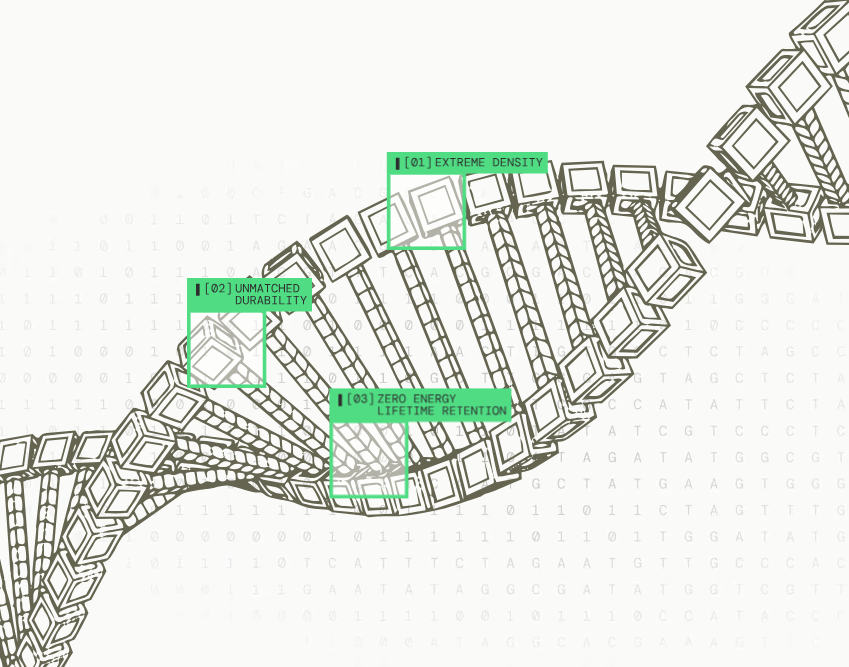
- Extreme density: Minimal energy overhead and decades-long retention without active maintenance.
- Commercial deployment: Biomemory targets commercial deployment in data centers for 2H 2026, making it a near-term infrastructure planning consideration.
The architectural era ahead will be defined by what storage can sustain, and Biomemory is making a compelling case that biology belongs in that conversation.
Share this innovator profile
← Back to Innovator Illumination